Winter Reading List (so many books to read) and a bonus recommendation.

One of my critique partners taught me a new word this summer. That word was Tsundoku. Japanese for (roughly) the pile(s) of unread books that build up around your house, it pretty much describes my life.

On the plus side, I love having a big to-read pile, because I feel lost and confused when I’m between books and don’t know what to read next. It’s an icky, unsettled feeling, and I don’t like it. On the down side, I also like my house to be zen-like in terms of clutter and cleanliness…which just doesn’t work when you have two cats, a husband and thirteen-year-old daughter who love Lego, and you yourself collect books as if it were the apocalypse and your life depended on building a wall of novels to hold back the zombie hordes.

Lots of shelving has provided a partial compromise in most of the house…but hasn’t done a thing for the literary Leaning Tower of Pisa accumulating on my bedside table. I guess I’ll just have to read some of them!

Here are a few of the titles I plan to jump into this season:

The Bone Mother by David Demchuk. I picked this up at CANCON after attending a panel called The Horrible Renaissance, where David, along with DongWon Song, Regina Hansen, and Christian Baines, spoke about recent trends in the horror genre.
Here there are Monsters, by Amelinda Bérubé . This was another CANCON purchase, made sweeter by having a chance to talk with Amelinda herself. I haven’t met many other women (let alone moms) who write creepy YA horror.
This was a total impulse buy. I was at Chapters to buy the book below for Little Person’s enriched novel study and got lured in by the back cover blurb.
The Marrow Thieves by Cherie Dimaline. Let’s just say I am super happy with the direction Little Person’s English teacher is going with her enriched novel studies. For grade 7 she read Lord of the Flies, by William Golding (always one of my favorites) and Nation by Terry Pratchett (if you haven’t read this book, please please do), and this year she’s branching into the growing genre of Indigenous Horror. (For an interesting discussion of Indigenous Horror, check out Alicia Elliot’s great CBC article from Oct 17, 2019: https://www.cbc.ca/arts/the-rise-of-indigenous-horror-how-a-fictional-genre-is-confronting-a-monstrous-reality-1.5323428)
I am looking forward to reading this myself, once Little Person’s finished the related assignments.
Path of the Thunderbird by Sara Miller and Pat Toole. We purchased this while we were visiting the Grand Canyon – I wanted to read some Middle Grade fiction, and it was super-cool to find something with a setting and landmarks we knew.

Bonus Book Recommendation! It’s not fiction, but honestly, anyone who likes disaster movies will like this book.

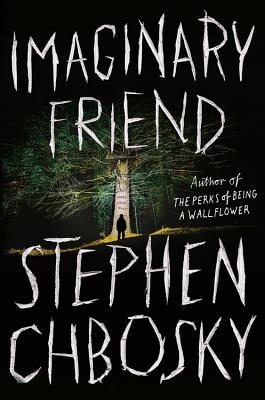
Over the Edge: Death in the Grand Canyon by Michael P. Ghiglieri and Thomas M. Myers

We read this cover to cover while we were traveling, trail-running, and hiking our way around Arizona, and I highly recommend it for anyone who plans to visit the Grand Canyon. The main take-away? Most deaths in the canyon stem from avoidable human error; overconfidence, risk-taking, ignorance, and just plain stupidity. Long story short, you (or your guide/hiking partner/scout leader) are never as prepared as you think you are, and please, DON’T BE THAT PERSON.

This book provides the perfect marriage of intimate case-studies, statistical information, and analysis. The tone is easy and at times even humorous, without ever detracting from the seriousness of the often deadly incidents they recount. I was left alternately shaking my head, laughing, or fuming with rage at the sheer negligence that contributed to some of the deaths discussed.

Family Vacations…otherwise known as “Location scouting for your Work-in-Progress”

Dan, Little Person, and I like to run. We like to run so much that we routinely sign up for long-distance trail races like Sinister 7, Spartan Beasts and Ultra Beasts, and Ragnar Trail Relays. We did our first Ragnar Trail Relay in 2018 and loved it so much we immediately decided to do another. But I must admit that when Dan suggested we sign up for the Ragnar Relay in Phoenix Arizona for Nov 2019, my enthusiasm came with ulterior motives.

Here’s the whole family in our little square of the Ragnar Village. And yes, Little Person is little in name only…she’s a good 4-5 inches taller at this point!

I love canyons. Always have, and don’t know why. Maybe they appeal to the same part of me that loves the stark beauty of the Canadian Shield country I grew up in. Rock like that can be humbling in its age and its grandeur. Regardless, wherever we travel, I jump at the opportunity to explore whatever canyons we can find.

“Could we,” I asked, “tack on a week or so of vacation while we’re down there? Travel around a bit? Maybe visit…some canyons? I mean, we’d already be there, right? And it would be a shame not to take advantage of it, right? Little Person could learn so much about geology!” Needless to say he saw through my half-@$$ed justifications in a heartbeat. Luckily, he loves me (and my writing) enough not to care. And to say yes.

Because loving canyons wasn’t my only motivation this time. One of the novels I am currently querying (an apocalyptic modern fantasy with a fresh, female-driven twist on the zombie genre…which has succeeded, I might add, in making approx. 75% of my test readers cry) has a number of memorable settings, but the one closest to my heart is an unnamed canyon system in the American South-West (think southern Utah/northern Arizona). Twisting slot canyons, high, sheer cliffs, isolation, and the unending beauty of shifting light on stone. This trip, I realized, would be a chance to actually visit canyons like the ones I had written about in person, rather than just via google maps, pictures, and the loving words of other stories set in that landscape. Like heck I was going to miss that opportunity!

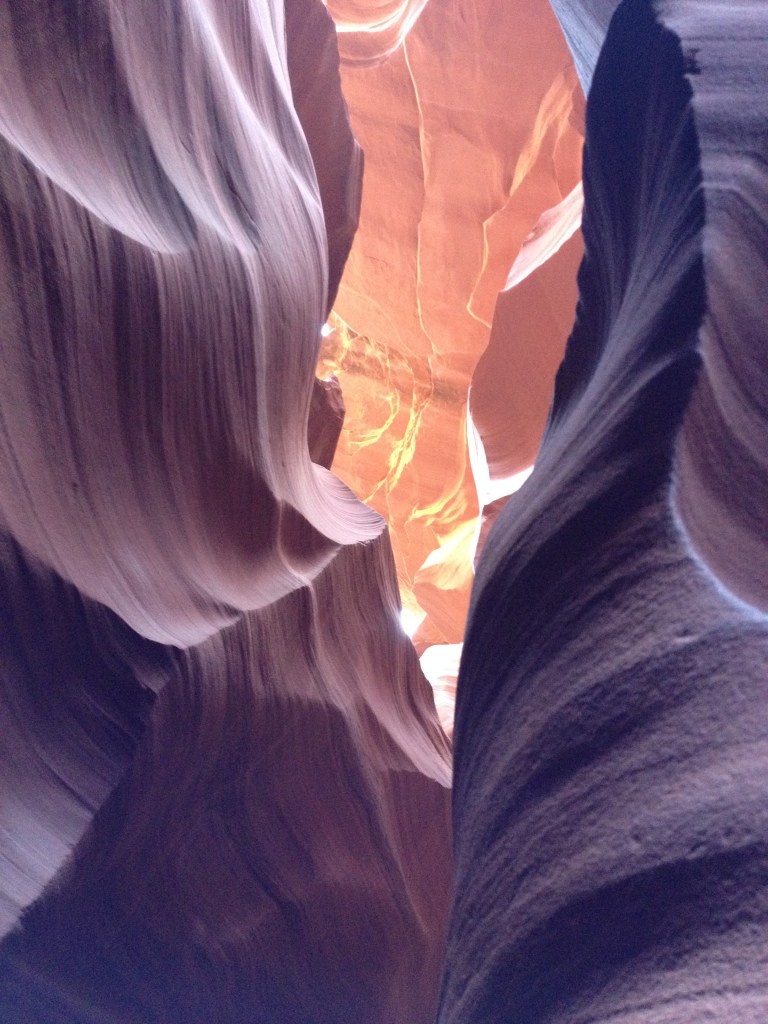
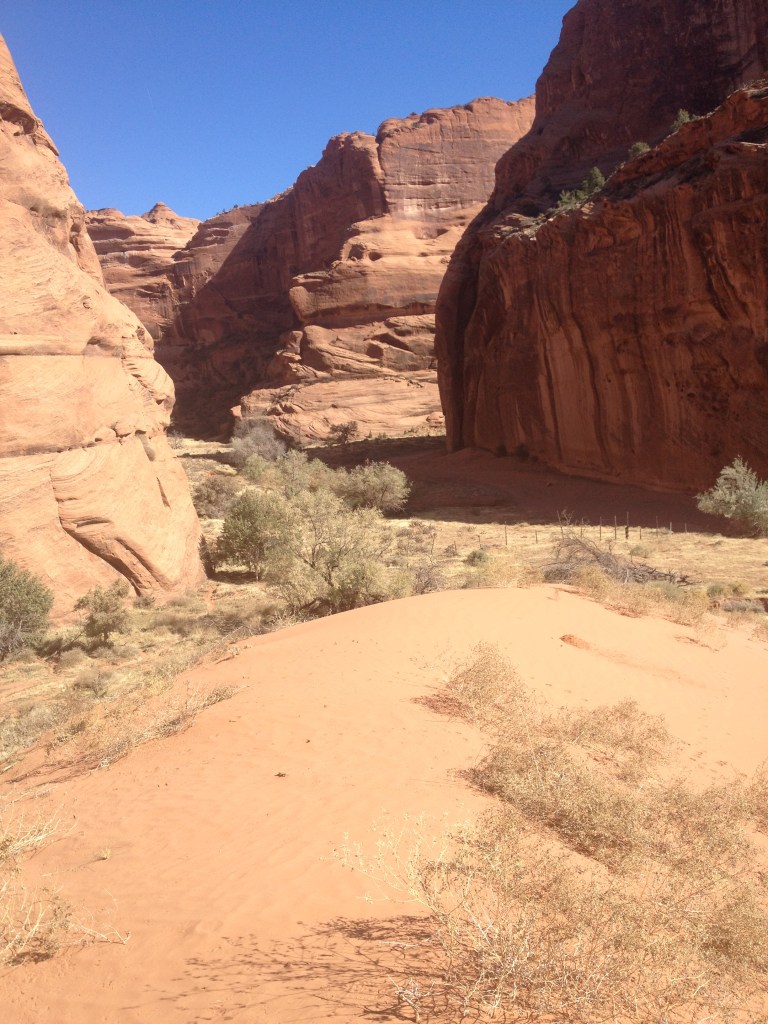
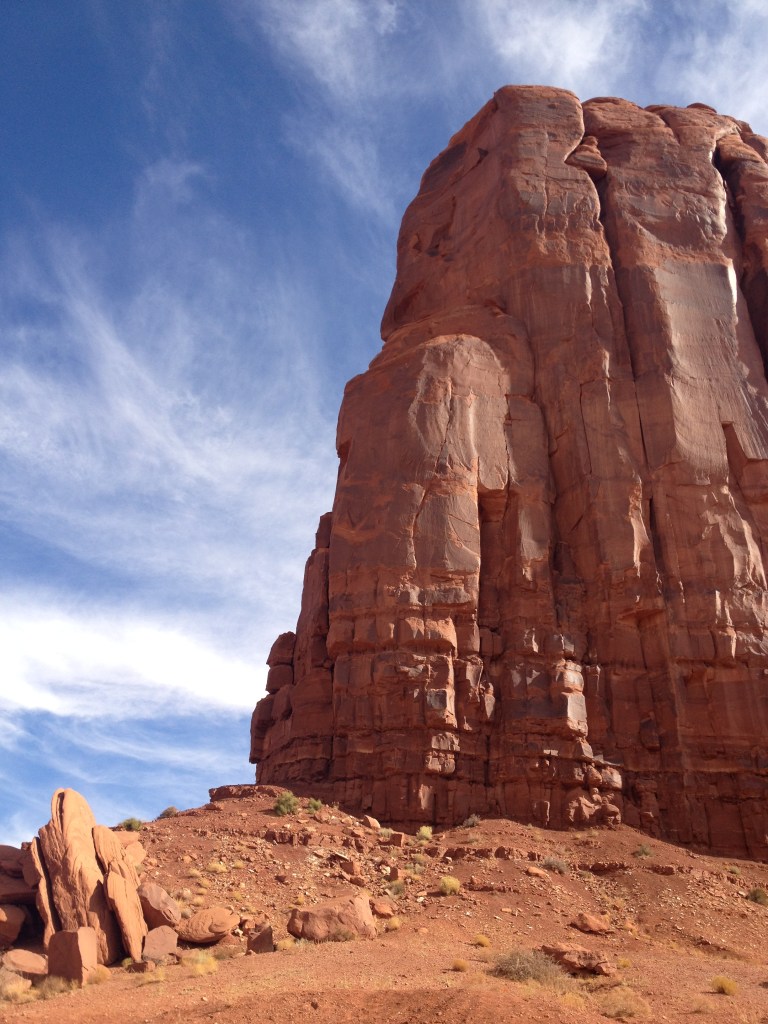
So we went, we ran, and we visited as many canyons as we could (including the Grand Canyon, which I loved, but found so big it felt impersonal, if that makes any sense). I was not disappointed, and while photos can hardly capture the beauty (or the palpitation-inducing anxiety of hiking down a 700ft cliff via a narrow, seldom-used trail), I’d like to share a few of my favorite images from the trip.

Back entrance to Upper Antelope Slot Canyon
Lower Antelope Slot Canyon
Canyon de Chelly
Monument Valley

Big News on the Short Story Front

I am pleased (read, really-really-really-super-happy-excited) to announce that two of my short horror stories will be appearing in upcoming anthologies.

I may have actually jumped up from my desk and done a little happy dance when I got the news.

My short story “House Spider”, inspired by a family get-together at an…interesting… cottage, will be appearing in the Thuggish Itch: Hospitality anthology from Gypsum Sound Tales.

My short story “BlueTooth” will be appearing in Guilty Pleasures and Other Dark Delights from Things in the Well Press. Submissions to this anthology were in the form of drabbles or double drabbles; an interesting writing challenge I thoroughly enjoyed.

For those unfamiliar with the term, a drabble is a short work of fiction of precisely one hundred words in length. A double drabble is exactly what it sounds like.

My absolutely professional response to all of this is: WOOT!

Fall Reading List

Some books I’m looking forward to diving into over the next few weeks. Some have great reviews, some have mixed reviews, but I plan to give them all a go.

Futuristic Violence and Fancy Suits, by David Wong. Dan and I enjoyed the “John Dies at the End” books so more than willing to give this a try.

Chimera, by Mira Grant. I’m currently reading the second book in this series. I’m a huge fan of her News Flesh novels, novellas, and short stories (I highly recommend “The day the dead came to show and tell”), so I’m curious to see how the series ends.

The Book Thief, by Markus Zusak. A hard left turn from my usual picks, but it comes highly recommended.

How to Be a Good Obstacle Course Racer or Don’t be a Douche-Bro

Okay, story time.

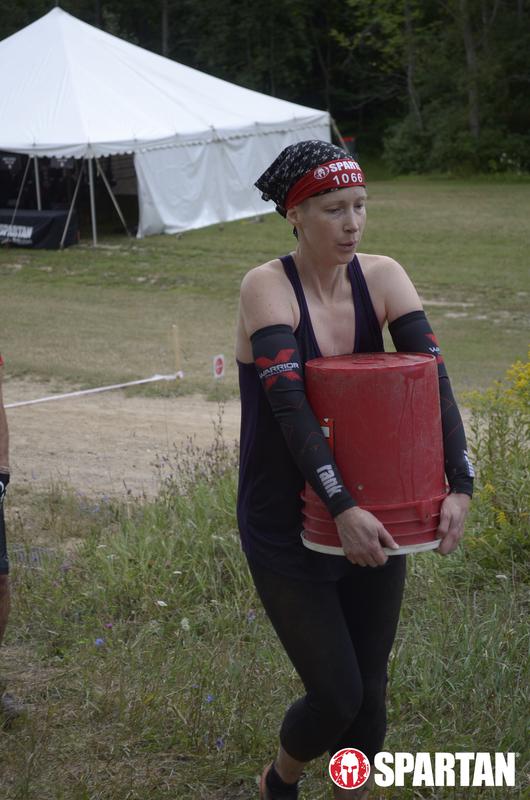
This past weekend, Dan, Little Person, and I ran the Spartan Trifecta Weekend at Duntroon, Ontario. It’s an event we’ve done before, and one we enjoy. The relatively flat terrain and long stretches of trail running make it a fun and accessible race for runners of all skill levels.

The bucket carry was near the end of the race. I’ll describe it for those who aren’t familiar with the course terrain. The buckets are set up at the bottom of a steep hill, one face of which is composed entirely of loose sand. They change things up a little every year, but this year we picked up our buckets, walked to the far end of the hill, turned, and climbed up a steep trail to reach the top of the hill. Then we turned again, and descended the hill via the slippery sandy slope. It was steep, the footing was VERY precarious, and the chances of falling (with your 50-70lb bucket in your arms) were relatively high, even while wearing good trail running shoes. 

This is where our story begins. I was picking my way down the sandy slope during the Sprint when my feet went out from under me, and I slid. I didn’t fall, but it was enough to make my heart leap. I yelped, and said “Wow, that’s dangerous!”

The man who’d been descending behind me chose that moment to barge past. As he did, he shot a glance down at my shoes (a pair of Tough Mudder branded Merrell trail shoes — I was saving my really good La Sportiva Bushidos for the Beast and the Super, since my Salomon SpeedTraks bit the dust last race) and then said “Go back to Tough Mudder.”

I was stunned. “I’ve been doing these races for five years,” I said. And then, as the anger really hit me “Don’t you dare tell me to Spartan the F#@& Up, you A$$.” But by then he was gone, and I was left fuming and hurt that someone…someone who I’d never met in my life…had judged me based on one moment of fear and my footwear. That he’d felt he had the right to tell me I didn’t belong in his race.

DUDE, WTF!?

This man didn’t know me. He didn’t know I was 2nd ranked in my age group in 2017, and would have hit age-range podium in every race I ran, if Spartan had had age-range podiums back then. He didn’t know that in October of 2017, at the OCR World Championships, I slipped on a very steep bit of trail, flew over six feet through the air and smashed down on my back hard enough to give me whiplash and a concussion that still affects me today. He didn’t know that as a result of that concussion, I haven’t been able to work in almost a year and half, or that when I get too stressed or mentally fatigued, my symptoms flare up. I lose words, I get confused, I have trouble making decisions. Sometimes I get so turned around that familiar things seem strange and I can’t place landmarks. Imagine driving somewhere you’ve been a million times before and suddenly having no idea how to get there, or how to get home. Scary, right? It’s frickin’ terrifying.

So of course I was going slowly. Of course I got scared when my feet slipped. I have a REALLY GOOD reason for being scared of falling again.

And then this a$$-hat has the gall to tell me to “Go back to Tough Mudder”?  How dare he imply I needed to STFU? Dude, I’m Spartan AF just for being out there!

But you know what? None of that matters. It doesn’t matter who I am, or my story, or that I have a really good reason for being slow, and being scared. Because regardless of who I am, he had NO RIGHT to say that. He had NO RIGHT to gate-keep our sport.

Obstacle course racing — our sport — is filled with the best people in the world. I’ve seen incredible acts of sportsmanship, compassion, and kindness on course: people stopping to help others, people giving out their own fuel, water, and even equipment to someone in trouble, people sacrificing their own time to carry/assist an injured competitor over the finish line. We have the very best people.

But we also have guys like the one I met. Dan and I call them Douche-Bros, and after seven years of racing, we’re sick of them.

So, with no further ado, I present to you:

How to be a Good OCR Racer or Don’t be a Douche-Bro

  • Control your run. I can’t even count the number of times I’ve seen out-of-control runners fall going down a steep, technical hill. But guess what? It’s way less than the number of times I’ve seen OTHER people tripped, bumped, or even knocked over by that out-of-control runner. Sure you want to go fast, but here’s the key; fast with no control isn’t skill. If you can’t stop or control your descent, you’re a danger to yourself and others.
  • Don’t cheat. It should go without saying, but unfortunately, it doesn’t. Don’t cut the course, don’t hide your band, don’t skip obstacles, and don’t skip your penalties. Follow the rules of the race you are running. And if, for some legitimate reason, you can’t do something, be open and honest about it. I have an impinged nerve in my shoulder (yet another after-effect from my ill-fated fall in 2017). It’s improved a lot over the past year, but I still can’t do obstacles that require a lot of swinging, like rigs or Urban Sky. I can’t do burpees very well either. I’m running age range this year because I want to see my race family, but when I get to something I can’t do, I explain my situation to the course marshals, recuse myself from competition, and do 50 jumping jacks instead of burpees.
  • Follow trail running etiquette:
    • Don’t block the path (i.e. step aside for faster runners)
    • Call out when you intend to pass. Douche-Bro’s are famous for not doing this. They’ll smash up behind you, elbow you out of the way, and whip past you without even a “sorry” or an “excuse me”. Don’t do this. If you come up to a slower runner, here are your options: if the trail is wide enough to pass safely, call out the side you intend to pass on. A quick “On your left/right”, will ensure that the other runner doesn’t accidentally get in your way. If the trail is narrow, let them know you are behind them, and ask to pass. “Runner back, can I pass on your left/right?” They’ll move over for you, trust me.
    • Say “Thank You”, when people move over for you.
    • Don’t litter. I know you’re trying to go fast, but if you drop that gel packet or that cup, some races will DQ you faster than you can say “litter bug”. And the ones that don’t should, ‘cause it’s just a jerk move. Part of the fun of OCR is the beautiful terrain we get to run through, and the runners behind you would like to enjoy it too. Take the time to put your garbage back in your pack.
  • Look out for each other. If you see someone down or struggling, ask them if they’re ok. If they’re good (and you believe them), you can keep going and you haven’t lost more than a second or two. If they’re not good, help them out! That could be calling over a volunteer, race staffer, or race medic. That could be offering a gel, salt pill, or water. That could be staying with them till help arrives, or getting them up and to the next obstacle/water station/volunteer. “But what about my time?” you say. Think of it this way; it’s just one race, and if you were injured, you’d want someone to help you.
  • Thank the volunteers. Be nice, be polite, and do not yell at them, no matter how frustrated you might be. If there is a misunderstanding about a rule, ask them to contact a course marshal. These people are donating their time to help you have a good race; treat them with respect.
  • Better yet, volunteer yourself. It’s a great way to meet other runners and learn more about how your favourite race works.
  • Don’t be judgemental of other runners. Just don’t. Speed, size, age, ability, appearance, strength, technical skill or lack-there-of…none of it matters. Everyone is here to run, push themselves to their own personal limits, and have a good time. Don’t ruin it for someone with snarky comments or snide looks.

And finally,

  • DON’T GATE-KEEP. Everyone is welcome in OCR. Hard Stop. From the best elite runner to the absolute newbie, everyone is welcome. No one gets to say who should or shouldn’t be running a Spartan, Tough Mudder, Dead End Race, Bone Frog, or Mud Hero. Even qualification-based races like NORAM and Worlds have an open charity race on the final day. If you are a competitive or elite runner, remember that it’s the open wave runners who make up the vast majority of participants in your race of choice. They’re the ones who bring the profit and keep your race going. Instead of gate-keeping, why not run two laps, one competitive and one open? Instead of judging other runners, put your skills to good use helping first-timers through the obstacles, cheering them on, and celebrating their successes. I say this because I believe, despite a few bad apples, that’s who OCR racers are. We’re inclusive, kind, and generous. We support everyone to do their very best, and we celebrate every success as if it were our own. And who knows…that newbie you help over the seven foot wall today might be standing beside you on the podium next year.

Summer Photo Projects

Every year Little Person and I do a mother-daughter photo project.  We pick a mythological creature — usually a monster, because it’s us — design a costume, and then head out to take reams of photos, which I then edit and play with till we have a finished product we both like. Ottawa is full of beautiful, evocative, and downright creepy settings, so we never find ourselves lacking for cool backdrops.

These joint photo projects have become meaningful over the years, because life is hectic and dedicated mother-daughter bonding time is hard to come by. So dressing your child up as a scary supernatural creature and taking art photos may be a little…different…from the usual mother-daughter activities, but it suits Little Person and I just fine.

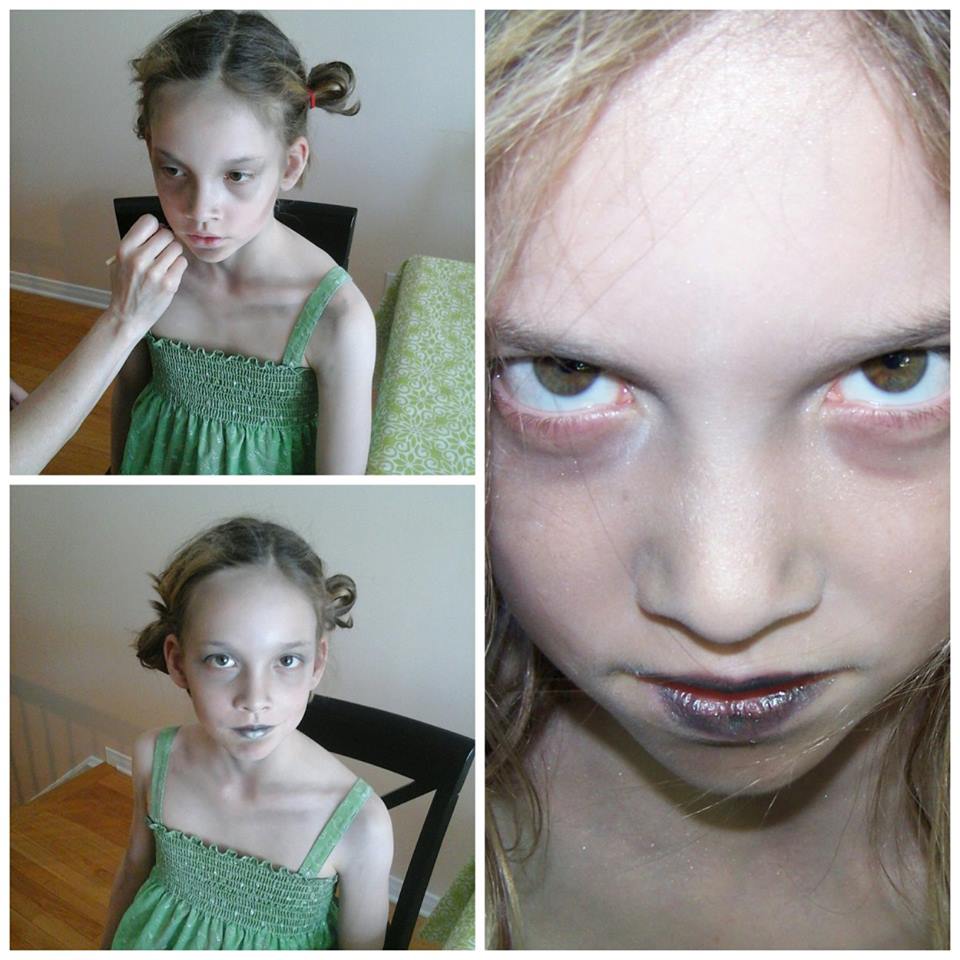
In 2015, we drew our inspiration from English folklore (and Terry Pratchett, of course – read ‘The Wee Free Men‘) to transform Little Person into a modern-day “Jenny Greenteeth“.  Jenny Greenteeth is a river hag, similar to Peg Powler or a grindylow, and is often described as green-skinned, with long hair, and sharp teeth. She pulls children and/or the elderly into the water to drown and eat them.

Make-up underway. I used a mixture of white stage make-up and foundation to create a translucent overall pallor, and then contoured with eye-shadow. In this case, I used light brown, light green, and dark green eye-shadow to create the facial and torso contouring, and then finished off with a metallic green eye-shadow for the eye-lids and lips.
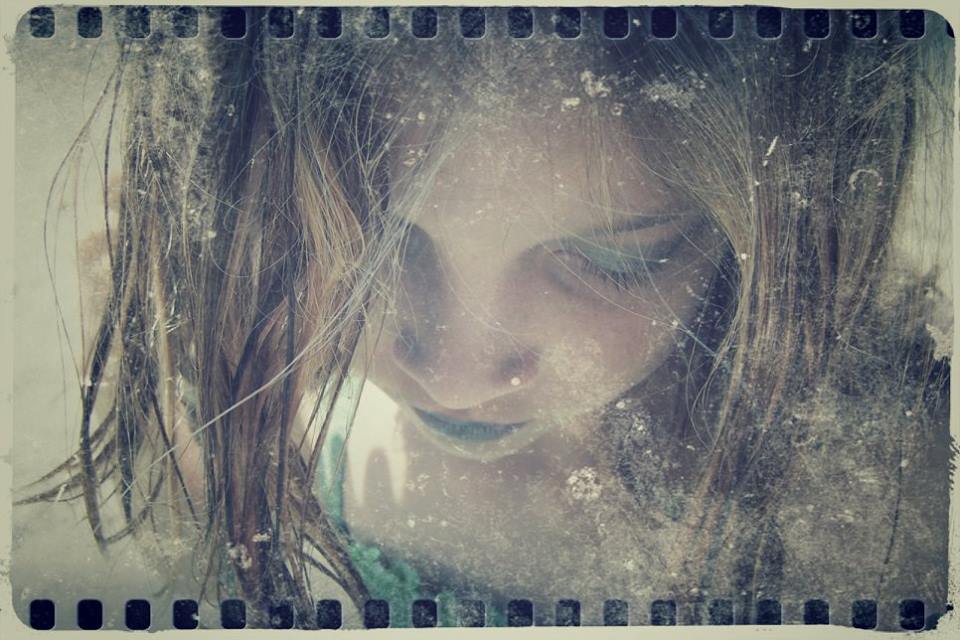
Little Person as “Little Jenny”
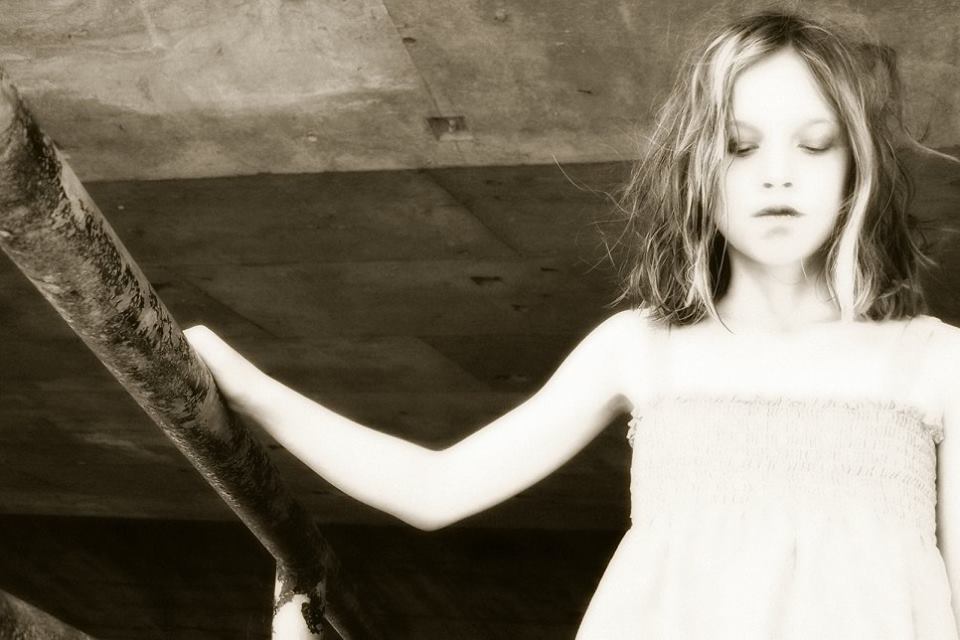
Jenny in black and white

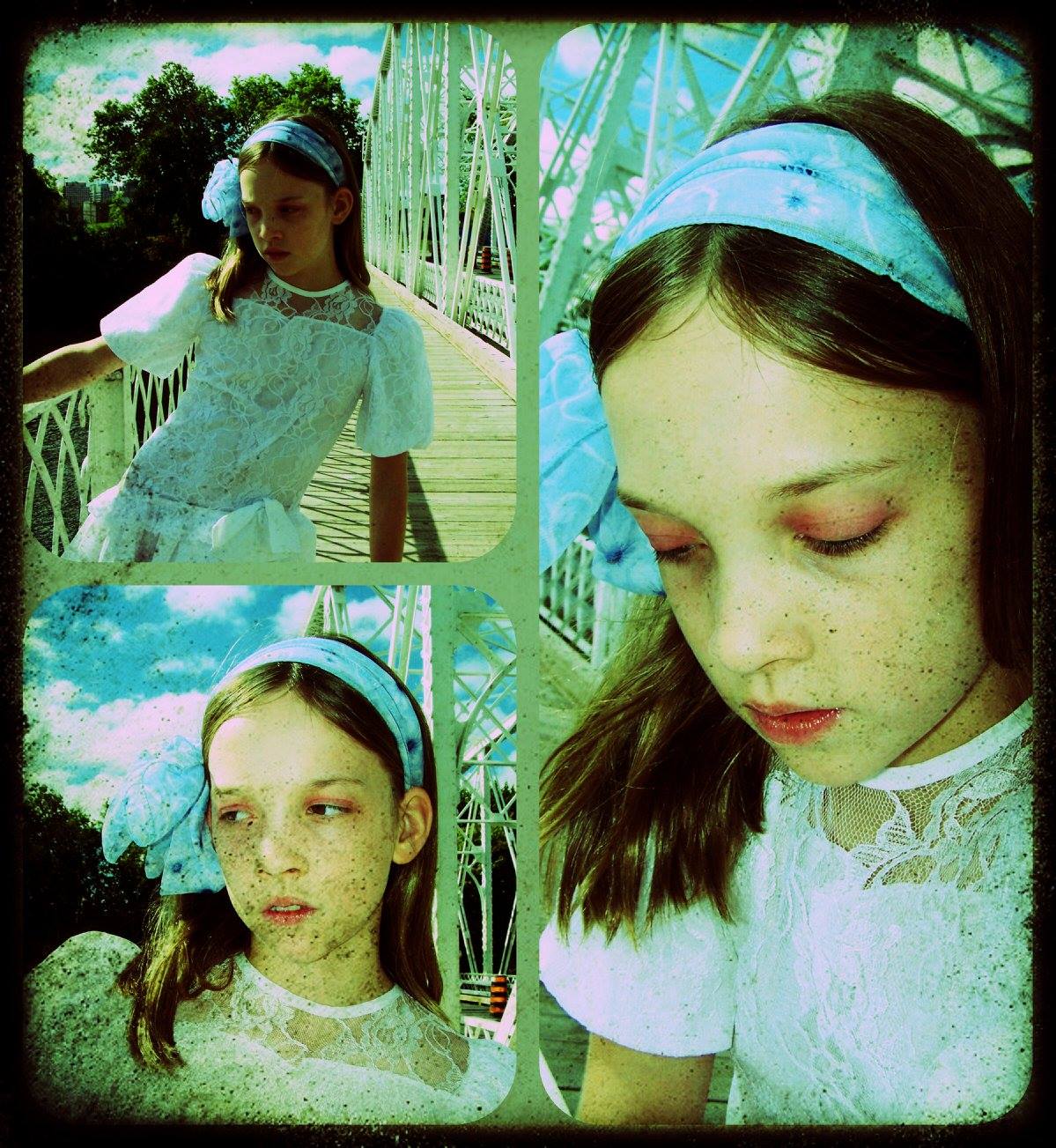
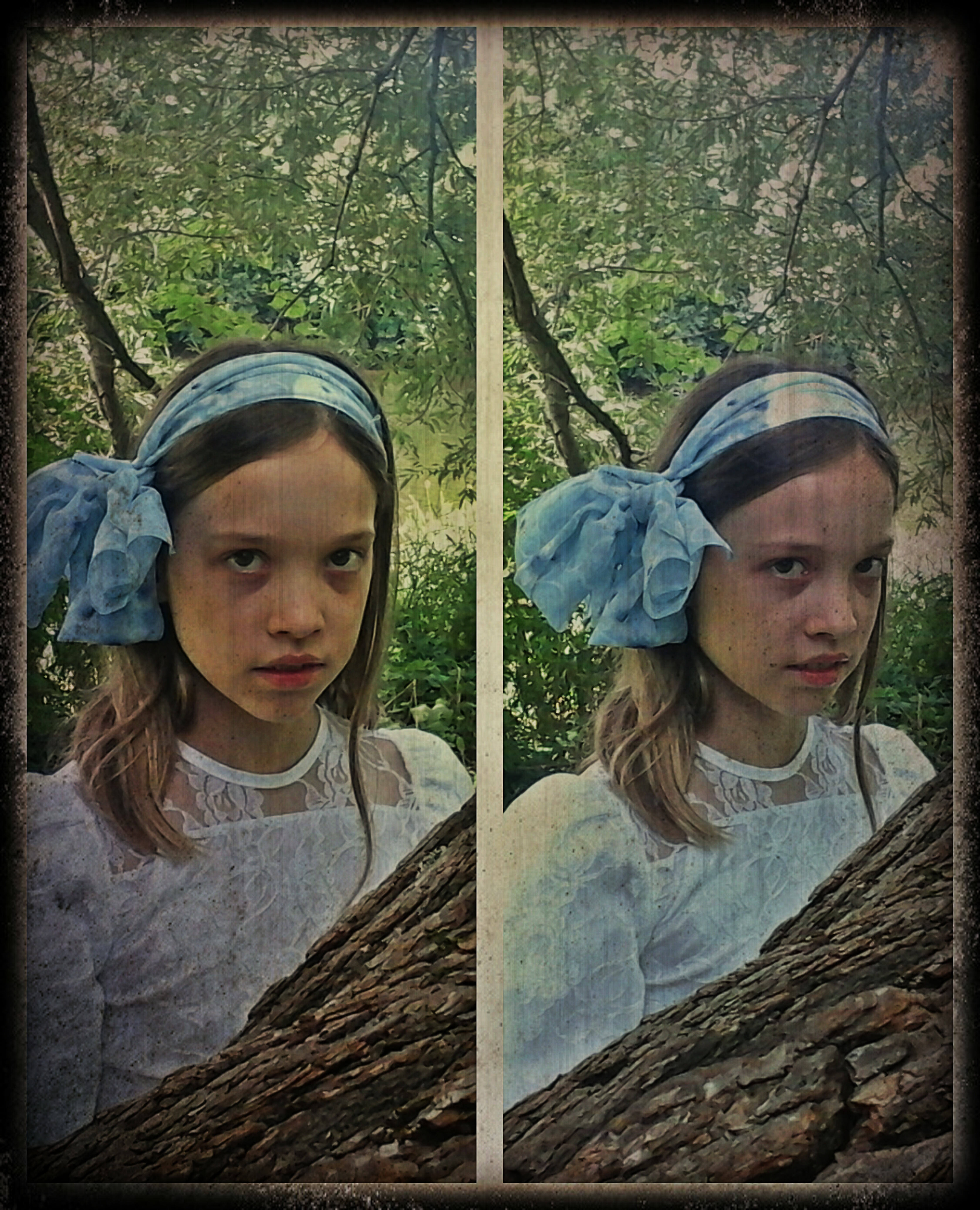
In 2016, our project was entitled “Ghost Girl”, and we picked a costume with vaguely 1920s overtones.

The make up for this project was kept very simple and innocent. Translucent powder, pink blush and lip gloss, and pink eye-shadow combined for an innocent, child-like effect. Of course, setting, filters, pose, and expression make a huge difference in the final product. Some of the photos from this shoot were quite sweet, while others were downright creepy.
A more aged look.
And now we’re getting a bit creepier. There’s just something about that little smile in the image on the right…she’s up to something.

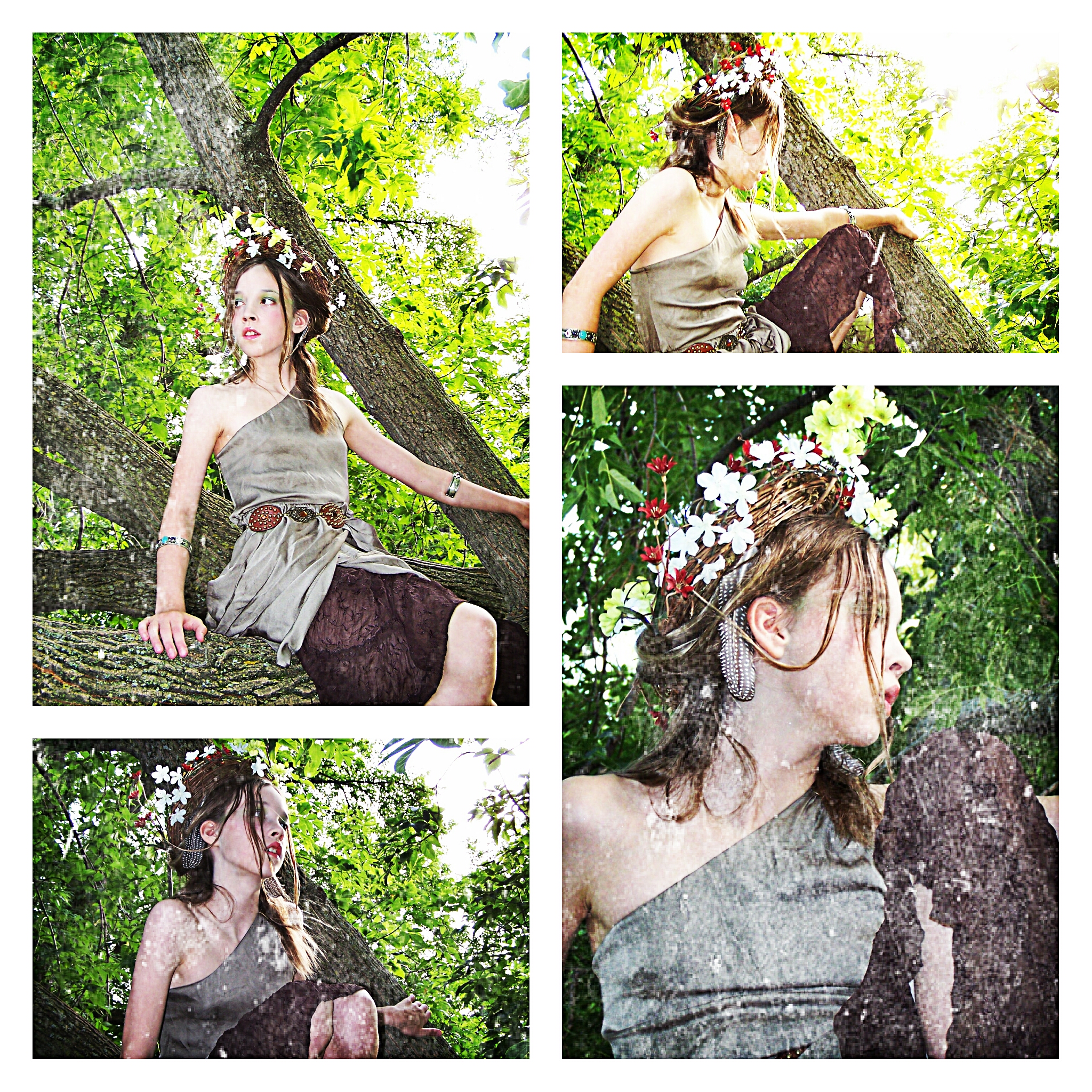
In 2017 we shook things up a little. Instead of going for horror, we delved into the classics with a Midsummer Night’s Dream themed photo shoot.

The look for this project was fresh and natural. Blush, bright pink lip-gloss, and pale green eye shadow complimented the natural setting of the photos. The clothes were all value-village finds, while the head-piece was constructed out of a wreath-form, plastic flowers, and real feathers, all purchased at Michael’s.

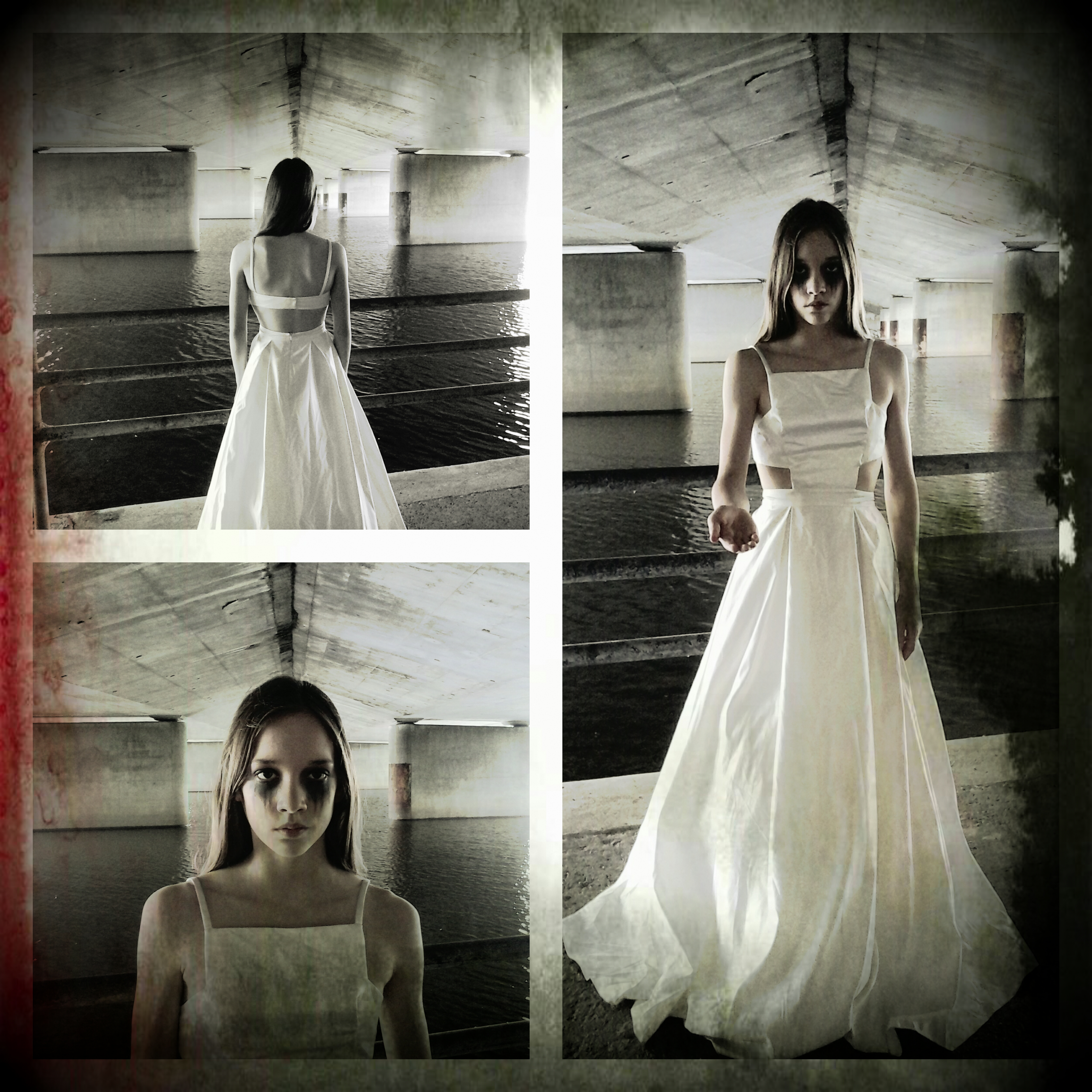
2018 took us back to our horror roots with a costume inspired by the Lady in White or Weeping Woman (The legend, not the movie; although both the 1988 film — worth watching, by the way — and 2019’s ‘The Curse of La Llorona’ have their roots in the legend).

A White Lady or Weeping Woman is a female ghost, and can be found in one form or another almost the world-over. Typically, she is associated with loss — usually of a husband or child — before her own untimely death. In some versions of the legend, these ghosts are harbingers of misfortune, while in others they are simply mournful and lonely, pining for their missing loved ones. Some stories, however, cast the White Lady as a more malevolent spirit. Having lost (or killed) her own children, she now seeks to lure others to their deaths.


We had intended to go Victorian for this costume, but Little Person found an incredible wedding dress at Marshall’s for an equally incredible price (the fact that it was a size 0 and barely fit a twelve-year-old might have had something to do with that) and so we went for a more modern interpretation instead. For make up, I once again used a mixture of white stage make-up and liquid foundation to create the overall translucent pallor, contoured with various shades of brown eye-shadow, and then used a combination of black eye-shadow, mascara, and water to create the weeping effect.
In these photos, it was all about the eyes.

We took our Twelve Year Old to see the new Pet Sematary, and that’s okay…for her.

Obviously, this is a bit of a tricky subject. There are probably a lot of people out there who will think twelve is too young for horror and we should be more careful in what we watch with her. Ironically, there are probably an equal number of people who think we’re too restrictive, because while we’ve introduced her to some horror, we wait till she’s in bed to watch The Walking Dead

I can hear the argument engines revving, so I’m going to start this post off right away with a few caveats:

  • Horror is not appropriate for all kids: Some people get scared easily. Some people don’t like being scared. You know your kid; make choices accordingly.
  • Not all horror is okay for kids: Horror is a broad and varied genre, and while I’ll argue below that sometimes it’s good to feel a little disturbed (what’s the point of horror if not to make us question society and ourselves), it’s not okay to feel damaged.
  • Watch with her vs. Let her watch.  We don’t “let” her watch horror. We watch it with her. We choose movies we think she’ll enjoy, and we watch them together, as a family. We talk about what’s going on, both from a character/society point of view, and from a narrative/structure/art point of view.

Why we decided to introduce our daughter to horror

One of the things all parents learn very quickly (I hope) is that their kids are not them. While Little Person (a bit of a misnomer, given that at twelve she’s at least three inches taller than me) shares traits with both of us, she is also decidedly her own person. And like all parents, Dan and I have had to adjust our parenting on the fly to accommodate those differences and meet her needs.

When I was growing up, the house rules around books and TV were pretty simple. If I could read it, I could read it, but Mom and Dad got final say on the TV. That meant that horror was not something I was exposed to until I was an adolescent, and that worked out pretty well for me. I’m one of those people who has come to appreciate the genre as an adult. As a pre-teen/teen on the other hand, I DID NOT LIKE being scared. I tried…I really did (my birthday parties between the ages of 13 and 15, which featured The Blob, Poltergeist, and Child’s play — with predictable results — can attest to that), but I got scared easily, and when I did, the fear stuck around for a long time. Slimer from Ghostbusters gave me nightmares, and Evil Dead (which I watched while sleeping over at a friend’s house) terrified the crud out of me. It was literally months before I could go for a hike in the woods without being scared to tears. Even the idea of being scared, scared me. I once brought home a copy of Pet Sematary from the public library and was so freaked out by the picture of the cat on the cover that I hid it under a pile of laundry till I could take it back, unread. It wasn’t till I discovered the Monster Panic sub-genre that I began to develop a taste for horror, and I’ll always have a soft spot in my heart for Tremors.

I began my adult life with the assumption that this kind of stuff was just too scary for kids. I remember being incensed at parents who took their eight year olds to see Jurassic Park. That movie made me jump (Raptors, like Aliens — and zombies — are uniquely terrifying. Something about the way they can navigate human environments). If it scared me, I thought, how could a kid handle it? I was NOT, I told myself, going to be one of those parents.

As she grew older, however, Little Person began to develop a taste for being scared that far exceeded my childhood tolerance. The turning point came when she was around six, and Dan took her to a live-action haunted house put on jointly by The Haunted Walk and Ottawa’s Diefenbunker Museum. She loved it. She loved it so much that when the call came for zombie volunteers the next year, she asked us if we could sign up. Turns out, kid’s good at being scary!

Little Person became the poster-child for the “Incident at the Bunker”
Little Person in action as a zombie.

Five years later, we’re still volunteering, and being behind the scenes in a haunted house has gotten her interested in the anatomy of horror. How can light, pacing, music and sound (or the lack thereof) be used to create tension and fear? How do jump-scares work? Etc., etc., etc..

Slightly older, but still rocking the creepy vibe.

That interest, combined with her emotional maturity and advanced reading level, led us to reconsider our stance on horror for kids. I had to eat my pre-child words (as most parents do) regarding Jurassic Park; she loves those movies, and they never scared her, although Jurassic World made her cry.

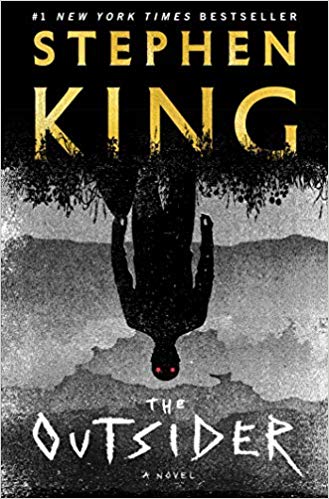
We began to gradually introduce the scary stuff we enjoyed, starting with horror themed board games (Arkham Horror and Zombicide) and Monster Panic movies.  Over the last year, we’ve moved into gothic horror, supernatural horror, and *some* zombie movies. She asked me to recommend some books, so I started her off with Stephen King’s “The Girl who Loved Tom Gordon”.

Our family ground rules for movies are as follows:

  • She doesn’t watch anything she hasn’t seen before without talking to us first. Dan and I will often pre-screen new movies to see what we think. If we say “no”, she knows it’s not arbitrary, and it’s not “no” forever. In terms of The Walking Dead, we’ve told her we’d talk about it when she turns fourteen. That’s not so far away, in the grand scheme of things.
  • Nothing with graphic violence (Although campy a la Army of Darkness is ok)
  • Nothing with sexual violence
  • When she watches movies with her friends at our house, it has to be something her friend’s parents are okay with. These are things I ask when meeting other parents. Right now she has one friend whose folks are okay with horror, and a number whose parents are not. That’s cool with us.

Long story short, every child is unique, and as a parent, you need to know your child. If they get frightened easily, are prone to nightmares, or — like adolescent me — have trouble letting go of fear …maybe horror isn’t for them. And that’s fine.

If, on the other hand, they like that shiver-down-the-spine feeling, love ghost and monster stories, and think Halloween is the best holiday ever (and not just for the candy), it may be time to explore some spookier fare.

How Horror can provide teachable moments

Horror can be supernatural or mundane, and can span the gamut from psychological thrillers that terrify while showing nothing at all to all-out gore-fests. What it all has in common is that horror as a genre is often about things that make us uncomfortable both personally and socially. Good horror asks the hard questions and (hopefully) makes us question ourselves and our assumptions. What is it like to be different, or alone, or trapped, or invaded, or powerless? What happens when society breaks down? How will people behave? What does it mean to be human…or not human?

Watching or reading horror with your kids can offer a lot of “teachable moments”, from the generic:

  • What should so-and-so have really done?
  • What would you do, if…?

To the social:

  • What social narratives about women do classic slasher movies often reinforce?
  • What are the common tropes in Monster Panic/Disaster movies, and what cultural narratives do they reinforce?
  • What does a movie like Get Out tell us about the experience of being black in in America?

Please DO watch movies that expose and subvert tropes and narratives, like Cabin in the Woods.  Stephen King’s novels are also a good place to begin conversations about gender stereotypes and domestic violence, as he often explores the terror inherent in being female or a child in a misogynistic society.

To the very personal:

  • Why does this scare me?
  • Why does this make me uncomfortable?
  • What does that say about the narratives I tell myself?

Needless to say, talking about horror provides way better opportunities for positive life lessons than a lot of other stuff out there aimed at young adults, particularly the stuff aimed at girls.

Horror books/movies that we’ve shared with Little Person (but may or may not be okay for other kids)

Caveats: I’ve put a * beside the ones that I’d hesitate on, with other kids her age who aren’t her. And, as usual with my lists, this is probably far from inclusive!

Books

  • Doll Bones by Holly Black
  • The Girl who Loved Tom Gordon by Stephen King
  • Carrie by Stephen King
  • It by Stephen King*
  • The Shining by Stephen King*
  • Cujo by Stephen King*
  • The Relic and Reliquary by Douglas Preston and Lincoln Child*
  • The Woman in Black by Susan Hill

Movies

  • Monster Squad
  • The Watcher in the Woods
  • Tremors (1-6)
  • Sleepy Hollow
  • Congo
  • Deep Rising
  • Anaconda & Anacondas (some sexuality, but not much)
  • Jaws (1&2)
  • Signs
  • Odd Thomas
  • The Cave
  • The Village
  • Lake Placid
  • Grabbers* (not super scary but does involve a lot of alcohol)
  • Night of the  Living Dead (1968 and 1990)*
  • Dawn of the Dead (1978)*
  • Day of the Dead (1985)*
  • Land of the Dead (2005)*
  • Cell*
  • The Relic* (The book is better!)
  • Zombieland*
  • Sean of the Dead*
  • Pride, Prejudice, and Zombies*
  • The Shining (1980 Kubrick version and 1997 miniseries)*
  • It (1990 miniseries and 2017 movie)*
  • The Stand*
  • Pitch Black*
  • Resident Evil (all)*
  • Underworld (all)*
  • Predator (1&2)*
  • Sweeny Todd*
  • Cabin in the Woods*
  • A Quiet Place*
  • The Woman in Black*
  • Crimson Peak*
  • Pet Sematary (1989 & 2019)*

Obstacle Course Racing, or “Why do I keep doing this to myself?”

Tough Mudder, Toronto, Ontario (2016)

Let’s get this right out there at the beginning. Obstacle course racing is super-duper fun, but it’s not for everyone. You’ll know by the end of your first race if it’s your thing:

  • Are you riding an adrenaline high so intense that you want to jump up and down and hug and kiss everyone at the finish line? Did going back to work the Monday after the race feel like culture shock? If so, welcome to your tribe!
  • Are you too cold/too hot, muddy, wet, miserable, angry, hurting, and never want to see another ski-hill or obstacle for the rest of your life? Did you tell yourself you’re never doing this ever again? If so, maybe OCR’s not for you.
  • Are you too cold/too hot, muddy, wet, miserable, angry, hurting, never want to see another ski-hill or obstacle for the rest of your life, BUT it was still loads of fun and you can’t wait to see everyone again next week because you’ve  already booked your entire race season a year in advance? You’re an OCR racer already! Why haven’t I seen you at the starting line?

If you don’t know what OCR is, I’ll paint you a quick picture: imagine a ski-hill or some other recreational wilderness type place with trails…or things that might be trails…or just bush; that’ll work too. Mark off a course anywhere between 5 to 50+ kilometres (bonus points if you can somehow make it go up and down the same mountain three or more times and still keep the scenery interesting). Add to this bucolic scene a crap-ton of obstacles: high walls, slip-ramps, slides, ropes, monkey bars, rings, jumps, crawls, mud pits, and every variation imaginable of carry-this-heavy-thing. Finally, stir in a heady mixture of music, rousing pre-race speeches, adrenaline, fear, fun, comradery, kindness, sportsmanship, and a thousand-odd runners of all skill levels pushing themselves to their limits…and you have an obstacle course race.

Spartan, Tough Mudder, Mud Hero, Warrior Dash, and Savage Race are some of the more well-known races, but there are lots more. Quebec in particular boasts a huge number of local races such as Dead End Race (with its infamous Apocalypse option, which involves carrying a 25-30lb sandbag for at least half of a 12k race), Northman, and Course Xtreme.

Why do I do this to myself? That’s a question that isn’t as easy to answer as it would seem.

Easy answer: I race because I enjoy trail running, the atmosphere, the people, and the buzz. My first OCR was a now-defunct zombie-themed race called Run for Your Lives. I ran their inaugural event in Maryland, and to this day have trouble expressing the incredible combination of joy, fear, and exhilaration it invoked. I wanted to do it again right away. I never wanted to leave. Coming back to the ‘real world’ was a let-down.

Also, I like chips and cake, and running a long race is a VERY good excuse for an indulgence.

Run For Your Lives, Butler PA (2012)
After our first Spartan Beast (2015)

Harder answer: I race because there is a part of me that always wants to push harder, to go further; to see exactly how much I can ask of myself before my body fails. OCR, especially some of the longer endurance events, lets me do that. There’s nothing like the feeling of asking something of yourself that you didn’t think was possible, and then doing it. And yes, it hurts. It hurts while you’re doing it and it hurts after. And the next day you’ll be stiff, sore, bruised, and ten pounds lighter than you were when you started. But the next time you face something that scares you or pushes you out of your comfort zone, you’ll be able to look back and say ‘but I did that’.

After the South Carolina Spartan Ultra (2018) (50k and 60+ obstacles, for those who are wondering) If you can’t tell, I’m really really tired!

Have I DNF-ed? (That’s ‘Did Not Finish’, for the non-race crowd) Yes, once, and I don’t regret it; it was the right decision to make at the time. Have I injured myself, sworn, thrown-up, limped across the finish line, and/or cried? Oh yeah; all of the above, and all more than once. Do I still love the sport? Absolutely.

I’m not an elite racer; I consider myself to be a solid middle-of-the-road competitive age-ranger. But after 7 years of racing (3 competitively, with three World Championships under my belt, and a 2nd place finish in the 2017 Spartan Canada Competitive Series F40-44) I’ve done things that geeky, book-worm me never thought I could, and I want to keep going to see how much further I can push.

So will I keep racing? Absolutely…but…

As I get older and the injuries pile up (Post-Concussion Syndrome and an impinged nerve in my left shoulder making up the current crop) I’m starting to think about stepping away from competitive OCR and sticking to the fun races. I think, over the next few years, I’ll probably move gradually toward more long-distance trail running. Same chance to push myself, less chance of further injury (although trail running has its own hazards: I messed up my right knee during a 50K staged trail run three weeks before the 2016 Obstacle Racing World Championships). Stepping back a little is okay, because it’s all about balance. I want to enjoy racing. And as much as I like to push myself, I want to be able to enjoy the rewards too. Like cake!